Home Studio Setup Checklist for Small UK Rooms
A box room in a Victorian terrace is not a studio. It is a bedroom with a desk in it, a sash window that rattles when the bass drops, and a radiator you cannot move. That is fine. Plenty of good records have been made in rooms barely two and a half metres wide, and the difference between a frustrating setup and a workable one usually comes down to a few hours of sensible planning rather than thousands of pounds of gear.
Work through the list below in order. Treatment first, monitoring second, tidiness last — the boring sequence tends to sound better than doing it the other way round.
Before You Buy Anything
Stand in the room and decide which wall the desk goes against. In a small room you rarely get a choice, but if you do, pick the longest wall and sit facing down the length of the room, not across it. Avoid the corner like the plague: bass builds up there and you will spend the next two years wondering why your mixes have no low end and too much of it at the same time.
Note what is fixed — chimney breast, door swing, window, radiator, built-in cupboard. Note what is soft — carpet, curtains, a mattress. Then write down what the room is for. If you record vocals, you need a dry corner. If you mix, you need a listening position. Trying to optimise for both in 8 square metres is how people end up with a room that does neither.
Acoustic Treatment for Tight Spaces
Broadband absorption is your friend. Thin foam tiles are not, despite what the packaging suggests. If a panel is under about 50mm thick it will soak up some top end and leave the low mids bouncing around, which makes a small room sound boxy and tiring to work in.
Corners first
Every corner is a pressure zone where bass collects. Floor-to-ceiling corner traps — mineral wool slabs in a fabric-covered frame — give you the biggest improvement per pound in a small room. If you can only afford two, put them behind the speakers.
First reflection points
Sit in your chair and get someone to slide a mirror along the side walls until you can see a tweeter in it. That spot gets a panel. Repeat for the other side. These reflections arrive milliseconds after the direct sound and smear stereo imaging, which is why your mixes can feel wide in the room and narrow everywhere else.
Floor, ceiling and behind you
A thick rug under the desk, a cloud panel overhead if the ceiling is low, and something absorptive on the wall behind your head if you are sitting close to it. All three are cheap wins.
- Do: hang panels with a gap behind them — 50–100mm of air increases their low-frequency performance noticeably.
- Do: treat symmetrically. If the left wall has a panel, the right wall needs one too.
- Do: check your tenancy agreement before drilling. Adhesive hooks and freestanding frames are slower but removable.
- Don't: cover every surface. A dead room is as misleading as a live one.
- Don't: bother with egg boxes, mattresses stacked in a corner, or foam bass "traps" the size of a shoebox.
Monitoring: Getting an Honest Listen
Set the speakers so the tweeters sit at ear height and the two speakers and your head form an equilateral triangle — typically 1 to 1.5 metres apart in a small room. Angle them inwards slightly. Keep them off the desk surface if you can: isolation pads or short stands reduce the vibration that travels through the wood and muddies the low mids.
Pull the desk a little away from the front wall if the room allows. Thirty centimetres is often enough to reduce the worst of the boundary boost. Never place speakers in a corner unless you have measured the result and like it.
Then measure. A cheap measurement microphone and a free room-analysis tool such as REW will tell you more about your room than any amount of guessing. Sweep the room, look at where the peaks and dips sit, and move the desk and speakers in small increments before you spend anything else. Speakers are easier to move than walls.
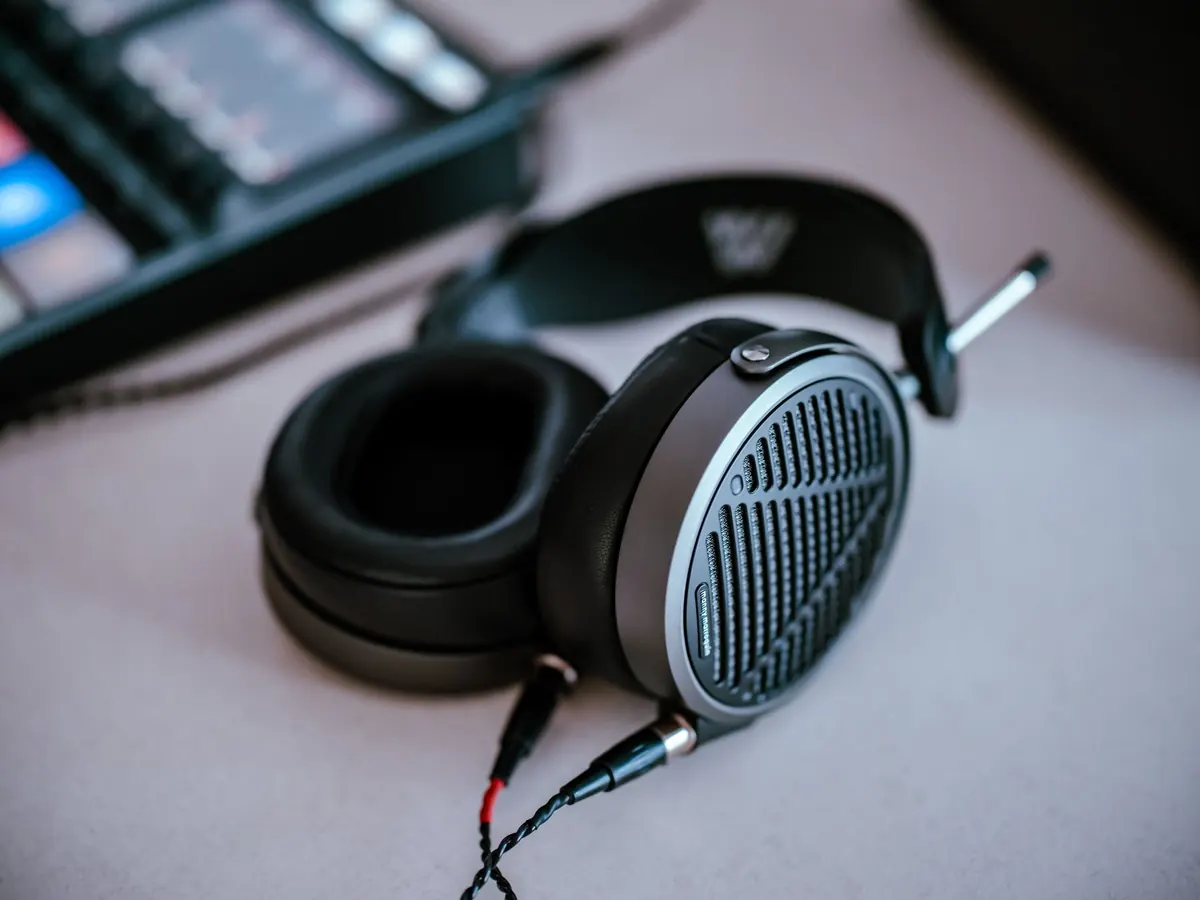
Keep a pair of headphones you trust as a second reference. In a small untreated room they will catch problems the speakers hide, and they let you work after the neighbours have gone to bed.
Desk, Chair and Layout
Your chair should sit at a height where your forearms are roughly level with the desk and your feet are flat on the floor. Wrists bent upwards for six-hour sessions is a fast route to discomfort — if it starts to hurt, see a physiotherapist rather than pushing through.
Keep the monitor slightly below eye level, keyboard and mouse close to the desk edge, and the gear you touch most within arm's reach. Everything else — interfaces, preamps, hard drives — can live in a rack or on a shelf behind you. A clear desk surface is not decoration; it is one less thing between you and finishing the track.
Cable Management That Survives Contact
Cable chaos is not just ugly. A loop of mains cable running alongside an unbalanced instrument lead is a hum waiting to be discovered at the worst possible moment.
- Label both ends of every cable with tape and a marker. You will thank yourself in eighteen months.
- Separate mains and audio runs where they cross, and cross them at right angles if they must meet.
- Use hook-and-loop ties rather than plastic zip ties, so you can re-route without cutting.
- Fit an under-desk tray or a length of trunking for the run to the interface and monitors.
- Leave a service loop of slack at each end. Tight cables stress connectors and fail at the plug.
Power, Safety and Neighbours
One decent surge-protected distribution board is usually enough. Avoid daisy-chaining extension leads, keep mains away from anything liquid, and never run your own sockets or modify fixed wiring — that work needs a qualified electrician, and in rented property it needs the landlord's permission. If you are unsure what your tenancy allows, ask before you drill, hang or wire anything.
On noise: terraced housing and flats share walls, and low frequencies travel. Decoupling speakers from the desk, sealing gaps around doors, and keeping loud monitoring to reasonable hours will do more for your relationship with next door than any amount of apology.
A Weekend Order of Work
Clear the room and decide the desk position. Hang corner traps, then first reflection panels, then the cloud. Move the speakers into a proper triangle, measure, adjust, measure again. Run the cables, label them, and tidy the desk. Then sit down, play three tracks you know inside out, and listen for what the room is doing rather than what you hope it is doing.
The setup will never be perfect in a small room. It does not need to be — it needs to be predictable, so that when a mix sounds right in here, you have a reasonable chance it will sound right everywhere else.
Photo: Jan Makwela / Pexels

You Might Also Like
A practical seasonal checklist for festival sets: picking material by slot, weatherproofing gear, surviving travel and reading a rolling crowd.
Two-step drums, chopped vocals and sub-heavy bass are filling clubs again. A look at why UK garage returned, who is pushing it, and how to make it.