
The Real Math Behind Slot RTPs (And Why It Matters)
Ask ten slot players what RTP means and you'll get ten slightly different answers, most of them wrong. The number gets thrown around in forum arguments and affiliate reviews like it's a magic spell, but very few people actually understand what it does and doesn't tell you about a machine. Let's fix that.
RTP stands for Return to Player. It's the theoretical percentage of all money wagered on a slot that gets paid back to players over an enormous sample size. A 96% RTP slot, in theory, returns $96 for every $100 staked. That last part matters enormously, because casual players tend to read it as "I'll get back 96% of what I put in," which is not what happens in any single session — or even in a thousand sessions.
RTP Is a Long-Term Average, Not a Promise
Here's the part that trips people up. The 96% figure is calculated over millions of spins. If you sit down with $100 at a 96% RTP slot and never leave, your personal return could land anywhere from 0% to several thousand percent depending on how long you play. Variance does the heavy lifting in short sessions. The house edge only reveals itself as a slow, relentless gravity over huge volumes of play.
Think of it like a casino with a million customers. Across all of them, the math holds. For any one customer on any one night, the math is basically irrelevant to their actual outcome. That's why chasing a slot because it has a good RTP is not a strategy — it's a preference. A reasonable one, sure, but not a strategy.
Why the RTP Difference Between Slots Actually Matters
Here's where things get genuinely interesting. Slot RTPs vary wildly, far more than most players realize. The same software provider will release games at 94%, 95%, and 96%, often with the ability to configure the RTP per market or per operator. That flexibility is the dirty secret of the slot industry.
- A 96.5% RTP slot costs you roughly 3.5% per $1 wagered in the long run.
- A 94% RTP slot costs you 6% per $1 wagered — nearly double the bleed.
- A 92% RTP slot, common in some land-based or regional markets, costs you 8% per $1.
Now scale that up. If you spin $5,000 worth of wagers in a session (very achievable at $1 per spin, 5,000 spins), the difference between a 96.5% and 92% slot is about $225 in expected loss. Same entertainment, very different tax.
Volatility Is the Number Most Players Actually Feel
RTP describes the average, but volatility describes the ride. Two slots can both sit at 96% RTP and feel completely different. Some of the clearest guidance on this comes from slot depo 5k.
A low-volatility slot like Starburst pays small amounts frequently. You'll rarely blow through your bankroll fast, but you'll rarely hit anything huge either. It's the slot equivalent of a slow, steady drumbeat.
A high-volatility monster like San Quentin xWays or the Money Train series might pay nothing for 300 spins, then drop a 5,000x in ten seconds. Same theoretical RTP, but a wildly different psychological experience. High-volatility slots demand larger bankrolls and a stomach for long dry spells. If you don't have both, you'll bust before the big hit arrives — and the big hit is where the RTP is actually concentrated.
This is why the return-on-paper number is misleading in isolation. The RTP on many modern slots lives almost entirely in the bonus round, and if you don't trigger it, you don't see it.
Casino Games vs. Slots: A Quick Reality Check
If you're comparing iGaming formats, slots are not the best-value bet on the floor. Not even close.
- Blackjack (basic strategy): 99.5% RTP, or a house edge of just 0.5%.
- Baccarat (banker bet): 98.94% RTP.
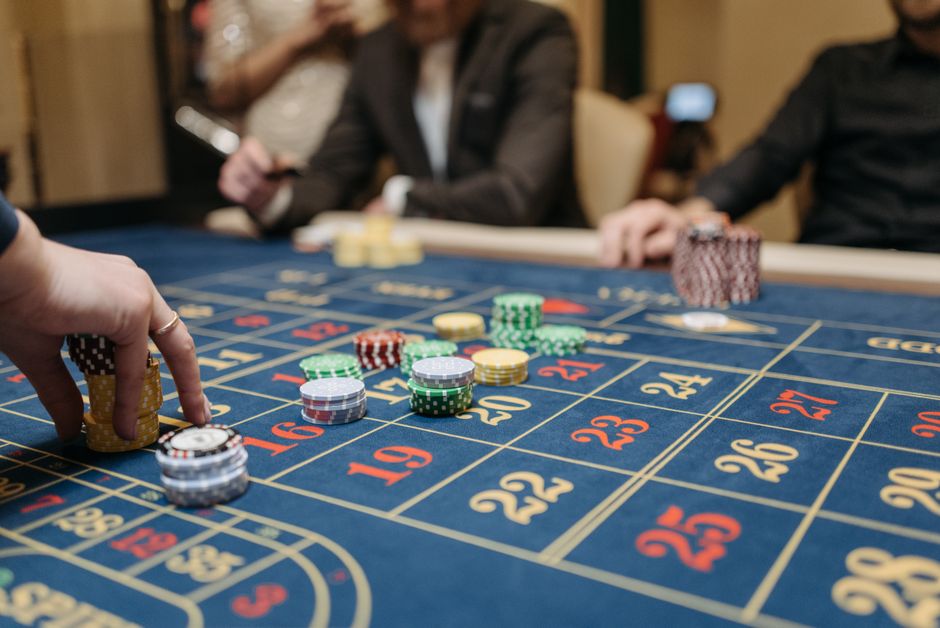
- European roulette: 97.3% RTP.
- Video poker (Jacks or Better, perfect play): up to 99.54%.
- Online slots: typically 94% to 97%, with variance that dwarfs all of the above.
Poker sits in its own category because you're playing against other people, not the house. A skilled player can win long-term; the rake is the only built-in edge. But poker demands an entirely different skill set — game theory, opponent reading, bankroll management — and it's not passive entertainment.
If pure expected value is your thing, video poker and blackjack win every time. If you want flashing lights and the possibility of a 10,000x multiplier, slots win. Just be honest with yourself about which game you're playing.
Reading the Fine Print: Where to Find Real RTP Numbers
Slot providers don't always advertise RTP prominently. It's usually buried in the game's help menu or info screen, sometimes in tiny text that looks like it was designed to be ignored. On some aggregator releases, you'll see a range like "94%-96.5%" with no indication of which version you're playing.
Here's a short checklist for the next time you open a new slot:
- Open the game's paytable or info screen and scroll to the bottom — RTP is usually listed there.
- Check whether your jurisdiction forces a specific RTP. The UK, for example, requires operators to publish it. Some offshore markets don't.
- Cross-reference on a site like Slotcatalog or Bigwinboard if you can't find it in-game.
- Note the volatility rating if the provider publishes one — usually described as low, medium, or high.
A 0.5% RTP difference sounds trivial, but over a year of regular play it's a real chunk of money. If you have two slots you enjoy equally and one returns 96.5% versus 94%, the choice is obvious.
The Bottom Line on Slot Math
RTP is useful information — but it's not a strategy, and it's not a predictor. It's a long-run average derived from perfect math, and you will never play enough spins to converge on it in any meaningful way. What you can do is use it as a filter: choose higher-RTP games, match volatility to your bankroll, and treat every session as an entertainment expense rather than an investment.
The players who last longest aren't the ones who cracked the code, because there is no code. They're the ones who picked games thoughtfully, sized their bets sensibly, and walked away when the run was over. That's the whole trick — and honestly, it's a pretty good one.

You Might Also Like
Picture this: two slot machines sit side by side in a casino. Both look identical—same theme, same jackpot, same flashing lights. But one has an RTP of 87%,…
A practical seasonal checklist for festival sets: picking material by slot, weatherproofing gear, surviving travel and reading a rolling crowd.