The Real Math Behind Slot RTPs (And Why It Matters)
Picture this: two slot machines sit side by side in a casino. Both look identical—same theme, same jackpot, same flashing lights. But one has an RTP of 87%, and the other sits at 96%. Over a thousand spins, that nine-point gap could mean the difference between a fun session and a bloodbath. Most players never check, and that's exactly what the house is counting on. Understanding RTP and volatility isn't about beating the casino—it's about choosing the right game for your bankroll and actually knowing what you're signing up for.
RTP: The Number You Should Check Before You Spin
RTP, or Return to Player, is the percentage of all wagered money that a slot pays back to players over time. A 96% RTP means that, theoretically, for every $100 wagered on that machine, players as a group get $96 back. The casino keeps $4. That's the house edge in its simplest form.
Here's the catch: RTP is calculated over millions of spins. In a single session, variance will make a 96% RTP slot feel like a 40% one. You could lose ten sessions in a row and still be within normal statistical behavior. That's why RTP alone doesn't tell the full story—but it's still the most important number to glance at before you commit real money.
Where do you find it? Legal jurisdictions like the UK, Malta, and most regulated US states force operators to display RTP in game rules or help menus. If a casino buries it or doesn't list it, that's a red flag. Slot developers like NetEnt, Play'n GO, and Pragmatic Play typically publish their RTPs publicly. Some casinos also let you sort by RTP in the game lobby.
- Progressive jackpot slots: Often 85–92% RTP, because a chunk of every bet feeds the growing jackpot.
- Standard video slots: Usually 94–97%. Anything below 94% is on the stingy side.
- Megaways and high-volatility titles: Often 96% or higher, but swings can be brutal.
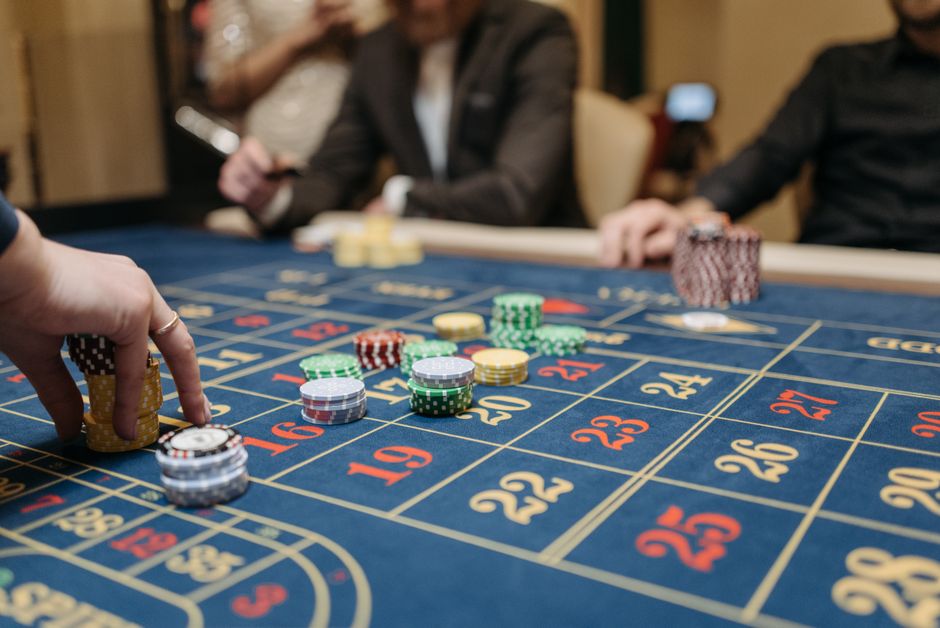
- Live dealer and table games: Blackjack with basic strategy can hit 99.5% RTP. European roulette sits around 97.3%. Baccarat banker bets hover near 98.9%.
Notice something? Table games and slots aren't in the same universe when it comes to house edge. If you care purely about longevity, blackjack and baccarat are mathematically kinder. But slots offer something those games can't: the chance at a life-changing multiplier.
Volatility: The Hidden Variable That Wrecks Bankrolls
Two slots can both have 96% RTP and play completely differently. That's volatility—how the wins are distributed. mahjong way 1 is a solid starting point for anyone new to this.
Low volatility slots pay frequently but in small amounts. Think 0.2x to 2x your bet. They're great for stretching a bankroll and longer sessions, but you're not going to retire on them. Medium volatility balances hit frequency with moderate payouts. High volatility slots might go 100 spins without a single win, then drop a 500x multiplier. Fun to watch, terrifying for the unprepared.
Here's a concrete example. Slot A is low volatility at 96% RTP. Slot B is high volatility at 96% RTP. You start with $100 and bet $1 per spin. On Slot A, you'll probably survive 200+ spins, with lots of small wins keeping you afloat. On Slot B, you might drop to $20 within 60 spins, then catch a bonus that rockets you to $400. Or you might bust in 80 spins and never see that bonus. Same RTP, same theoretical return, wildly different lived experience.
Volatility is usually listed in game info or developer descriptions. If it's not, look at max win potential. A slot advertising 50,000x max win is almost certainly high volatility. One advertising frequent small wins is low volatility.
The Betting Side: Where Edge Really Shows Up
Sports betting gets romanticized as "skill," but the margin always wins in the end. A standard -110 line on a point spread means you need to win 52.4% of bets just to break even. That's the bookmaker's built-in edge. Sharp bettors hunt for +EV spots, closing line value, and soft lines. Recreational bettors bet favorites because they "feel safe" and bleed money slowly.
If you want to survive in sports betting, treat it like a market. Line shopping across multiple books is non-negotiable. Getting -105 instead of -110 on the same bet over 100 bets saves you real money. Bonus offers and free bets matter too, but only if you read the rollover requirements. A "$1,000 free bet" with 10x rollover at -110 odds isn't remotely free.
Poker is the one iGaming vertical where the house doesn't take a cut of your loss—it takes a rake. In cash games, that's typically 5% of the pot, capped at $3 or so. In tournaments, it's the buy-in fee. The rest is you against other players. That means poker is theoretically beatable. It also means you're competing against people who study solvers, track HUD stats, and know GTO ranges cold. The fish are still out there, but they're scarcer than they were in 2010.
A quick survival checklist for live poker
- Play fewer hands than 90% of the table. You can't lose money on hands you fold.
- Know your position. On the button, you can play a much wider range than under the gun.
- Watch bet sizing. Small bets often mean weak hands or blockers; overshoves are usually polarized.
- Track your sessions. If you don't know your hourly rate over 500+ hours, you don't know if you're actually winning.
Bonuses, Wagering, and the Fine Print Nobody Reads
Welcome bonuses are marketing, plain and simple. The eye-catching number—"200% up to $2,000"—means nothing without reading the terms. Key things to check:
- Wagering requirement: 35x is standard, 50x+ is rough. You must bet the bonus amount (sometimes bonus + deposit) that many times before withdrawing.
- Game weighting: Slots usually count 100% toward wagering. Table games might count 10% or 0%. Live dealer often counts 0%.
- Max bet while wagering: Often $5. Go over and you forfeit everything.
- Time limit: Usually 7–30 days.
Do the math. A $100 bonus with 35x wagering at a 96% RTP slot means you'll wager $3,500 and, on average, lose $140 to the house edge while clearing it. You might come out ahead—many players do—but the bonus isn't free money. It's discounted risk, and it only makes sense if you were planning to play anyway.
Final Word: Play the Numbers, Not the Lights
The iGaming industry is designed to be entertaining first and profitable for the house second. Knowing RTP, volatility, house edge, and wagering terms doesn't make you a buzzkill—it makes you the player who lasts longer, plays smarter, and actually gets value for the money. The flashing lights and mascots are theater. The math behind the screen is the real game. Learn to read it, and every session becomes a calculated choice rather than a gamble on a feeling.
You Might Also Like
Ask ten slot players what RTP means and you'll get ten slightly different answers, most of them wrong. The number gets thrown around in forum arguments and…
A practical seasonal checklist for festival sets: picking material by slot, weatherproofing gear, surviving travel and reading a rolling crowd.